


When breakouts keep returning, the most useful facial is not necessarily the most intense one. Acne-prone skin can be oily and congested in one area, sensitive or dehydrated in another, so treatment should begin with understanding what your skin is showing today.
Start with a Personalized Skin Roadmap for guidance tailored to your skin.
An acne facial in Orange County should focus on the concerns currently present, such as clogged pores, excess oil, congestion, or inflammation, while protecting the skin barrier. That makes it different from a regular spa facial, which may be centered more on relaxation and general skin refreshment. The right approach can include professional assessment, gentle customized techniques, and guidance for consistent care at home.
OC Skin Care Center takes an education-first approach to skin health, with treatment choices shaped by your condition, sensitivity, goals, and response over time. This guide also builds on the broader context of medical-grade facials in Orange County by looking more closely at what acne-focused care is designed to do and where its limits are. The distinction starts with purpose, personalization, and the scope of each facial.
What Makes an Acne Facial in Orange County Different From a Regular Spa Facial?
The difference is usually the purpose of the appointment. A regular spa facial may be selected for relaxation, cleansing, hydration, or a general sense of skin renewal. An acne-focused facial begins with a more specific question: what is contributing to this skin's congestion, oiliness, or inflammation? The next question is what type of care is appropriate without unnecessarily disrupting the barrier.
That does not make one approach universally better than the other. A relaxation-focused facial can be a comfortable way to care for your skin. An acne facial is better suited to someone seeking targeted, education-first guidance for blemish-prone or congested skin. At OC Skin Care Center, a Newport Beach practice serving the broader Orange County market, esthetic facial services are part of a clinical-spa experience. The practice also offers medically supervised skin treatments. Customized acne facial care is selected according to skin condition and individual needs, rather than applied as a fixed template.
| Consideration | Acne-focused facial | Regular spa facial |
|---|---|---|
| Primary purpose | Target concerns such as clogged pores, excess oil, congestion, and acne-related inflammation with gentle, focused care. | Support general cleansing, hydration, comfort, and relaxation, depending on the spa's menu and approach. |
| Starting point | Skin condition, sensitivity, current concerns, and the condition of the barrier help shape the treatment plan. | A broad facial protocol or selected service may guide the appointment, with customization varying by provider and menu. |
| Customization | Techniques and products are adjusted to the skin's response and goals. The emphasis is on targeted care without over-stripping. | Customization may focus on the client's preferred experience or general skin needs, rather than acne-specific priorities. |
| Follow-up | Education and personalized home-care guidance can help connect in-practice care with daily skin health. | Aftercare may be provided, but ongoing acne-focused planning is not necessarily the central purpose. |
OCSC's Acne Facial is designed to support clearer, healthier-looking skin while respecting the skin barrier. That barrier-aware approach matters because aggressive or poorly matched care can leave skin feeling irritated, dry, or unbalanced. The goal is not to force every breakout into the same protocol. It is to make thoughtful choices based on the skin in front of your provider.
Follow-up should also remain individualized. Some spas describe recurring visits as part of acne-prone skin care, but a suggested schedule from another provider is not a universal plan for every person. Your response, sensitivity, goals, and the nature of the acne concern should inform what happens next. If breakouts are severe, cystic, scarring, or persistent, an esthetic facial should not replace appropriate medical evaluation. OCSC's broader model keeps esthetic facial care distinct from medically supervised treatment when a concern extends beyond its scope.
Which Skin Concerns Can a Targeted Acne Facial Address?
A targeted acne facial is most useful when the visible concerns are related to congestion, excess oil, clogged pores, or mild inflammation. At OC Skin Care Center, the approach is designed to support clearer, healthier-looking skin while respecting the skin barrier. That means your provider considers how your skin is behaving, not just what a breakout looks like on the surface.
Clogged pores and congestion: Oil, dead skin cells, and product residue can contribute to a congested appearance. Gentle, targeted care may help address buildup without relying on an overly aggressive approach. Extractions, when appropriate for the skin and the specific area, should be handled carefully rather than treated as a goal in every appointment.
Excess oil: Oily skin does not always need to be stripped. Over-cleansing or harsh exfoliation can leave the skin feeling tight and may weaken its protective barrier. A personalized acne facial can focus on restoring balance while supporting the skin's ability to remain comfortable and resilient between visits.
Inflammation and sensitivity: Redness, tenderness, and active blemishes can signal that the skin needs a calmer plan. OCSC's Acne Facial emphasizes gentle techniques, targeted care, and barrier-aware support rather than a one-size-fits-all sequence. The exact choices depend on your skin condition, sensitivity, acne pattern, and provider recommendations.
Home care is part of that picture. Your provider may discuss gentle cleansing, barrier support, sunscreen, and active ingredients when appropriate for your needs. Product directions and professional recommendations matter because an ingredient that helps one person may irritate another. Avoiding picking and excessive exfoliation can also help reduce unnecessary stress on acne-prone skin.
These services are supportive esthetic care, not a diagnosis or a substitute for medical acne treatment. Severe, cystic, scarring, or persistent acne may require evaluation by a dermatologist or another qualified medical professional. The Mayo Clinic's acne diagnosis and treatment guidance explains why acne care may involve medical assessment and treatment options beyond a facial. If your concerns exceed the esthetic scope, your provider can help you understand when additional evaluation may be appropriate.
For concerns that fit this supportive approach, explore OCSC's customized acne facial care and discuss what may be appropriate for your skin.
What Happens During an OCSC Acne Facial?
An OCSC Acne Facial is planned around the condition of your skin on the day of treatment. Our trained OCSC team considers concerns such as congestion, excess oil, sensitivity, and visible inflammation before deciding which steps are appropriate. The flow below is a general framework, not a promise that every client receives every step or that every appointment follows the same sequence.
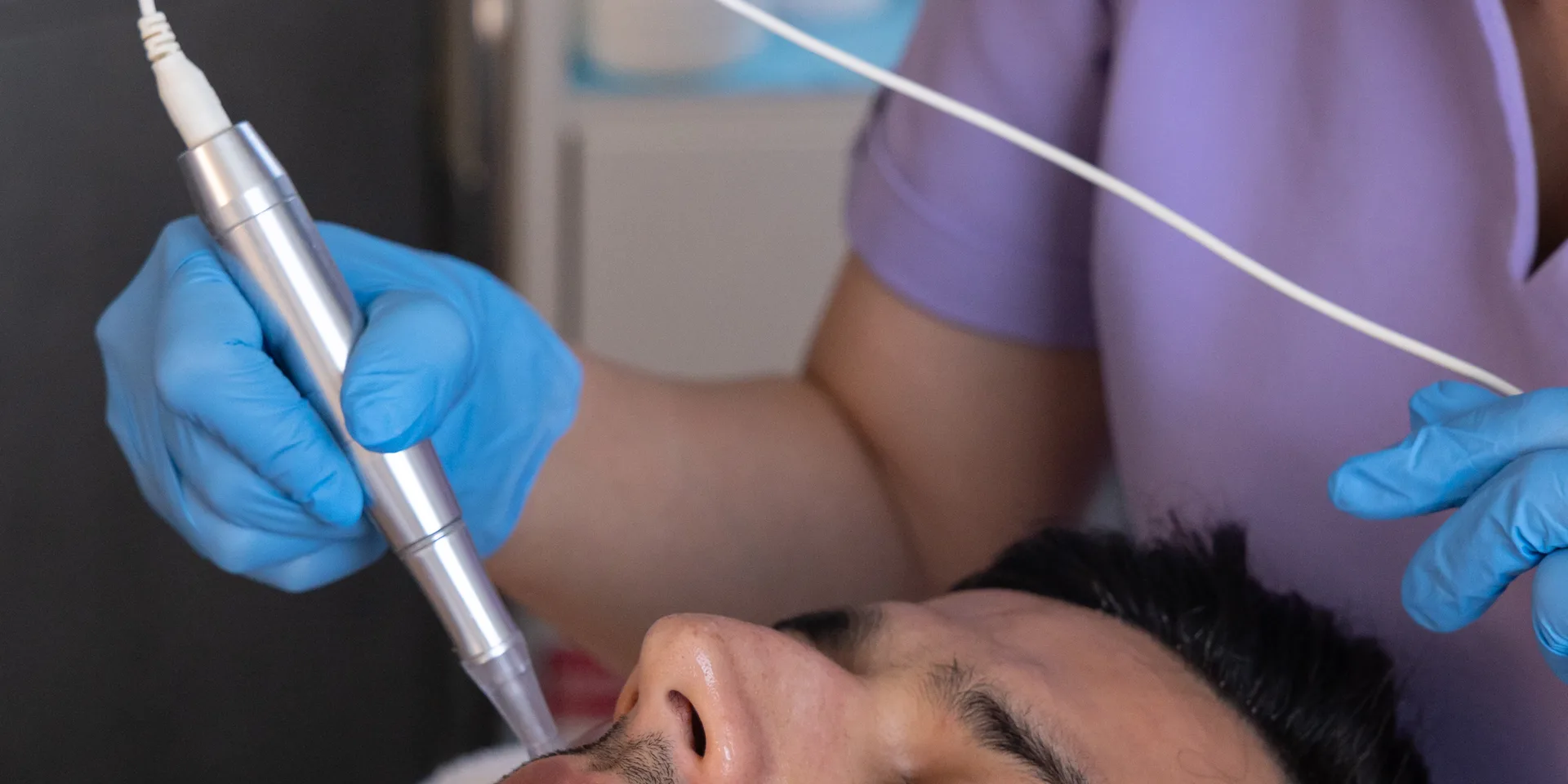
- Skin assessment and treatment planning. Your provider begins by looking at your current skin needs, including congestion, oiliness, irritation, and the condition of the skin barrier. This helps determine whether a targeted facial is appropriate and which techniques should be used conservatively. If your concerns suggest severe, cystic, scarring, or persistent acne, an esthetic facial is not a substitute for medical evaluation.
- Cleansing and preparation. The skin is gently cleansed to remove surface buildup and prepare it for the next steps. The goal is effective preparation without unnecessarily stripping the barrier, since compromised or irritated skin may need a more supportive approach.
- Appropriate exfoliation. When suitable for your skin, your provider may use a gentle exfoliating step to support the removal of surface buildup and improve the treatment's focus. Exfoliation is not automatically intensified for active acne. The level and method depend on sensitivity, inflammation, current products, and your provider's recommendations.
- Targeted care and possible extractions. The treatment may include focused care for clogged pores, excess oil, congestion, or inflammation. Extractions may be considered when appropriate, but they are not guaranteed for every appointment. A careful, individualized approach is more important than adding every possible technique.
- Calming and supportive finishing steps. Depending on your skin's response and needs, the appointment may finish with targeted calming care, hydration, or other supportive products. OCSC's approach emphasizes restoring balance and respecting the barrier rather than over-treating the skin. The exact finishing steps vary by provider recommendations.
- Home-care guidance. Before you leave, your provider can explain how to support your skin between visits. Guidance may include gentle cleansing, barrier support, sunscreen, and appropriate active ingredients when recommended. Avoiding picking and excessive exfoliation can also help limit unnecessary irritation. Your home routine should follow personalized guidance and product directions, not a universal schedule.
This framework is distinct from advanced procedures such as microneedling or medical-depth chemical peels, which are separate treatment options rather than automatic parts of an acne facial. You can explore OCSC facial treatments to compare services and learn which type of care may best fit your skin goals.
How Many Acne Facial Sessions Are Needed to See Results?
There is no universal number of acne facial sessions that guarantees a particular result. The right cadence depends on the type of acne, your skin's sensitivity, the condition of the skin barrier, how it responds to treatment, and the consistency of your home care. A plan for occasional congestion may look very different from support for recurring inflammation or excess oil.
At OC Skin Care Center, session planning is part of individualized care rather than a preset package. Your provider can assess what your skin is showing, discuss your goals, and determine whether an acne facial is an appropriate next step. The Acne Facial is designed to support clearer, healthier-looking skin while respecting the barrier, so treatment choices should be measured against how your skin is responding rather than against an arbitrary visit count.
Why frequency varies from person to person
Some clients may benefit from occasional targeted care when congestion becomes noticeable. Others may need a continuing plan that combines appropriate in-office sessions with a personalized home routine. Reassessment shows whether the approach is helping and whether the skin needs more recovery time. It can also show when the focus should shift toward barrier support or another type of professional care.
Skin sensitivity matters. Repeated exfoliation or extractions without considering irritation can work against long-term skin health. A gentler approach may be more appropriate when the barrier is compromised, when the skin is reactive, or when active products are already part of your routine. Conversely, a provider may adjust the plan as congestion, oiliness, or inflammation changes. Recommendations should follow the skin's condition and response, with product directions and provider guidance taking priority over a generic calendar.
Facial results are not the same as prescription treatment timelines
Information about how long prescription acne treatments may take to show results should not be used to predict how many facials you need. These are different types of care with different goals, mechanisms, and clinical considerations. An acne facial can provide targeted esthetic support, but it is not a substitute for medical evaluation when acne is severe, cystic, scarring, or persistent.
Reassessment also helps identify when a concern may exceed the scope of an esthetic facial. A thoughtful plan may include fewer, more carefully timed visits, continued home support, or referral for medical guidance. The goal is not to promise clear skin after one appointment. It is to make informed adjustments that respect your skin and support realistic, healthier-looking results over time.
How Should You Care for Acne-Prone Skin Between Visits?
Professional care is only one part of an acne-focused plan. The choices you make at home can either support the skin barrier or add unnecessary irritation between appointments. A steady, personalized routine is usually more useful than changing products every time a breakout appears.
Keep cleansing gentle and consistent
Use a gentle cleanser that removes oil, sunscreen, and daily buildup without leaving the skin feeling tight or stripped. Scrubbing harder does not remove congestion more effectively, and a tight feeling after cleansing can be a sign that the routine is too aggressive for your barrier. Cleanse according to your provider's guidance, especially if your skin is dry, sensitive, or recently treated.
Support the barrier before adding more active ingredients
Acne-prone skin can still become irritated or dehydrated. A suitable moisturizer can help support comfort and barrier function while you address congestion or inflammation. Active ingredients may be helpful for some skin concerns, but the right choice depends on your skin condition, sensitivity, current products, and treatment plan. Use an active only when it has been recommended for you, and follow the product directions and your provider's instructions.
Depending on the individual skin concern, OCSC's Aurora Skincare options such as SalicyClear or Azelaic Elegance may be incorporated into a personalized home-care routine. While DreamSkin Moisturizer may be considered when lightweight hydration and skin comfort are priorities. Product selection and frequency should be based on the individual skin condition and provider recommendations.
This is particularly important with retinoids and other potentially irritating ingredients. There is no universal retinol schedule that is appropriate for every person. Your provider may recommend a gradual approach, adjustments based on your skin's response, or a temporary pause around certain treatments. Product order can also vary by formulation and active ingredients, so use a personalized at-home skincare routine as a framework rather than a rigid sequence. The complimentary Tangent AI assessment takes approximately two minutes to complete, and your personalized Skin Roadmap is typically delivered within 24-48 hours.
Protect your skin and avoid creating new irritation
Apply a broad-spectrum sunscreen during the day and follow the specific aftercare guidance you receive after a facial. Sun protection is especially important when your routine includes ingredients that can increase sensitivity. Avoid picking or squeezing blemishes, which can prolong inflammation and increase the risk of marks. Over-exfoliating can also compromise the barrier, even when the goal is to improve clogged pores. More treatment is not always better treatment.
OC Skin Care Center's approach emphasizes conservative, individualized care and long-term skin health. Our trained OCSC team can help you understand which home-care steps fit your current skin needs, rather than asking you to follow a one-size-fits-all routine. The Personalized Skin Roadmap can also provide a starting point for more individualized guidance.
Is an Acne Facial Right for Every Type of Breakout?
An acne facial can be a thoughtful option for certain concerns, including clogged pores, excess oil, congestion, and some visible inflammation. The goal is supportive care that respects the skin barrier rather than aggressive treatment that leaves the skin feeling stripped or irritated. At OC Skin Care Center, your provider considers the condition and sensitivity of your skin before deciding whether targeted facial care is appropriate.
That distinction matters because not every breakout has the same cause or needs the same level of care. A facial may help support the appearance and comfort of skin with milder congestion, but it does not diagnose acne or replace medical treatment. Severe, cystic, scarring, or persistent acne deserves appropriate medical evaluation. A dermatologist can assess the type and severity of acne and discuss treatment options when a facial alone is unlikely to address the underlying concern. The American Academy of Dermatology provides an overview of how dermatologists diagnose and treat acne at How dermatologists treat acne.
When a different treatment approach may be more appropriate
Active, painful cysts, acne that is leaving scars, or breakouts that continue despite consistent care may require a broader plan. In those situations, avoid assuming that more exfoliation or more extractions will produce better results. Irritating the skin can make it harder to maintain a healthy barrier and may not address the reason the acne is continuing.
It is also useful to separate an esthetic acne facial from advanced procedures. Microneedling and medical-depth chemical peels are distinct treatments, not automatic components of a standard facial. They may be considered for different concerns, such as acne-related scarring or texture, only when they are appropriate for the individual and delivered within the proper treatment framework. You can learn more about chemical peel treatment options without assuming that a peel is the right next step for every breakout.
The most useful question is not whether an acne facial is universally right. It is whether the treatment matches your current skin condition, goals, and need for medical care. A careful assessment helps keep the plan realistic, personalized, and focused on long-term skin health.
Frequently Asked Questions
What is the difference between an acne facial and a regular spa facial?
An acne facial is designed around concerns such as clogged pores, excess oil, congestion, and inflammation. The treatment is adjusted to your skin condition, sensitivity, and goals, with attention to preserving the skin barrier. A regular spa facial may be more relaxation-focused, although services and customization vary by provider.
Can an acne facial help with cystic or persistent acne?
A facial may support surface congestion and overall skin comfort, but it is not a substitute for medical evaluation of severe, cystic, scarring, or persistent acne. Those concerns may require diagnosis and treatment planning beyond esthetic care. The American Academy of Dermatology provides additional guidance on how dermatologists treat acne.
How often should I schedule an acne facial?
There is no universal number of sessions or schedule. Your provider can reassess how your skin responds and determine whether continued in-office care, adjusted home care, or medical evaluation is appropriate. A series should not be presented as a guaranteed path to a particular result.
What should I do at home between acne facial appointments?
Follow a gentle, personalized routine that supports the barrier, uses active ingredients only when recommended, and includes sunscreen. Avoid picking and excessive exfoliation, which can increase irritation. Product order and retinol frequency should follow your provider's guidance and the directions for your specific products, rather than a universal schedule.
Ready to Explore Personalized Acne Facial Care?
Acne-prone skin can benefit from a thoughtful plan that considers your current concerns, sensitivity, and long-term goals. The right guidance can help you understand which facial approach and home-care support may be appropriate for your skin. To learn more and request personalized guidance, get started with the Personalized Skin Roadmap through OC Skin Care Center.