

Compare BioRePeel, VI Peel, and traditional TCA peels in Orange County, including skin concerns, recovery, and how personalized guidance shapes the choice.
Chemical Peel in Orange County: BioRePeel vs. VI Peel
Sep 18, 2026

Searching for a chemical peel in Orange County can quickly lead to a long list of names, strengths, and promises. BioRePeel, VI Peel, and traditional TCA peels are not interchangeable treatments, and the most appropriate option depends on your skin concern, current skin condition, tolerance for visible peeling, and treatment goals. This comparison is part of OC Skin Care Center's advanced skin treatments guide, which places chemical peels alongside other professional options.
Start with your complimentary Personalized Skin Roadmap to get individualized guidance before choosing a peel.
Quick answer: BioRePeel is a biphasic TCA peel designed for tone and texture work with little to no downtime according to OC Skin Care Center's service information. VI Peel is a branded professional peel system with formulations selected for different concerns. Traditional TCA peels are customized by concentration and depth. A qualified provider should assess your skin before recommending one.
What should you know before choosing a chemical peel in Orange County?
A chemical peel is a professional exfoliating treatment that uses a carefully selected solution to improve the appearance of texture, tone, dullness, discoloration, fine lines, or certain types of congestion. The name alone does not tell you how deep the treatment goes or how much recovery to expect.
The useful comparison is not simply which peel is strongest. It is which approach fits your skin's current condition and the result you are trying to achieve without creating unnecessary irritation. A peel plan should account for sensitivity, barrier health, active breakouts, pigment history, recent sun exposure, medications, home-care products, and any upcoming event.
- Superficial peels generally focus on surface-level exfoliation and a refreshed appearance with less recovery.
- Medium-depth peels reach further and may create more visible redness or peeling, so assessment and aftercare become especially important.
- Traditional TCA peels are not one single treatment. The concentration, number of passes, application technique, and intended depth all affect the plan.
Professional care matters because the same peel can be appropriate for one person and too irritating for another. The American Academy of Dermatology explains that chemical peels vary by depth and that results and recovery depend on the treatment selected and the provider's technique. Learn more about chemical peel basics from the AAD.
How do BioRePeel, VI Peel, and traditional TCA peels compare?
BioRePeel, VI Peel, and traditional TCA peels differ in how they are formulated, how the provider uses them, and how much visible recovery may occur. BioRePeel is a named biphasic system, VI Peel is a branded peel family with different versions, and traditional TCA describes a clinician-selected acid approach rather than one standardized product.
| Peel approach | What it means | Common planning focus | Recovery discussion |
|---|---|---|---|
| BioRePeel | A biphasic peel combining 30% TCA with vitamins and amino acids, as described by OC Skin Care Center. | Dullness, uneven tone, texture, and early signs of aging when a lower-recovery approach is appropriate. | OCSC describes little to no downtime, although individual redness, sensitivity, or flaking can vary. |
| VI Peel | A branded professional peel system with formulations that vary by version and intended concern. | Depending on the version, a provider may discuss acne, discoloration, uneven tone, or texture. | Visible peeling and aftercare may be more noticeable with some versions. Your provider should explain the expected course. |
| Traditional TCA peel | A TCA-based treatment selected and applied according to the desired depth and the person's skin. | Targeted resurfacing for texture, tone, or other concerns when a customized depth is appropriate. | Recovery is not fixed. It depends on concentration, depth, application, skin response, and aftercare. |
The table is a starting point, not a treatment prescription. Product names do not replace a skin assessment, and the same brand can be used differently depending on the provider's protocol. Ask what depth is intended, what you should stop using beforehand, what visible changes to expect, and when your normal routine can resume.
What makes BioRePeel different from other chemical peels?
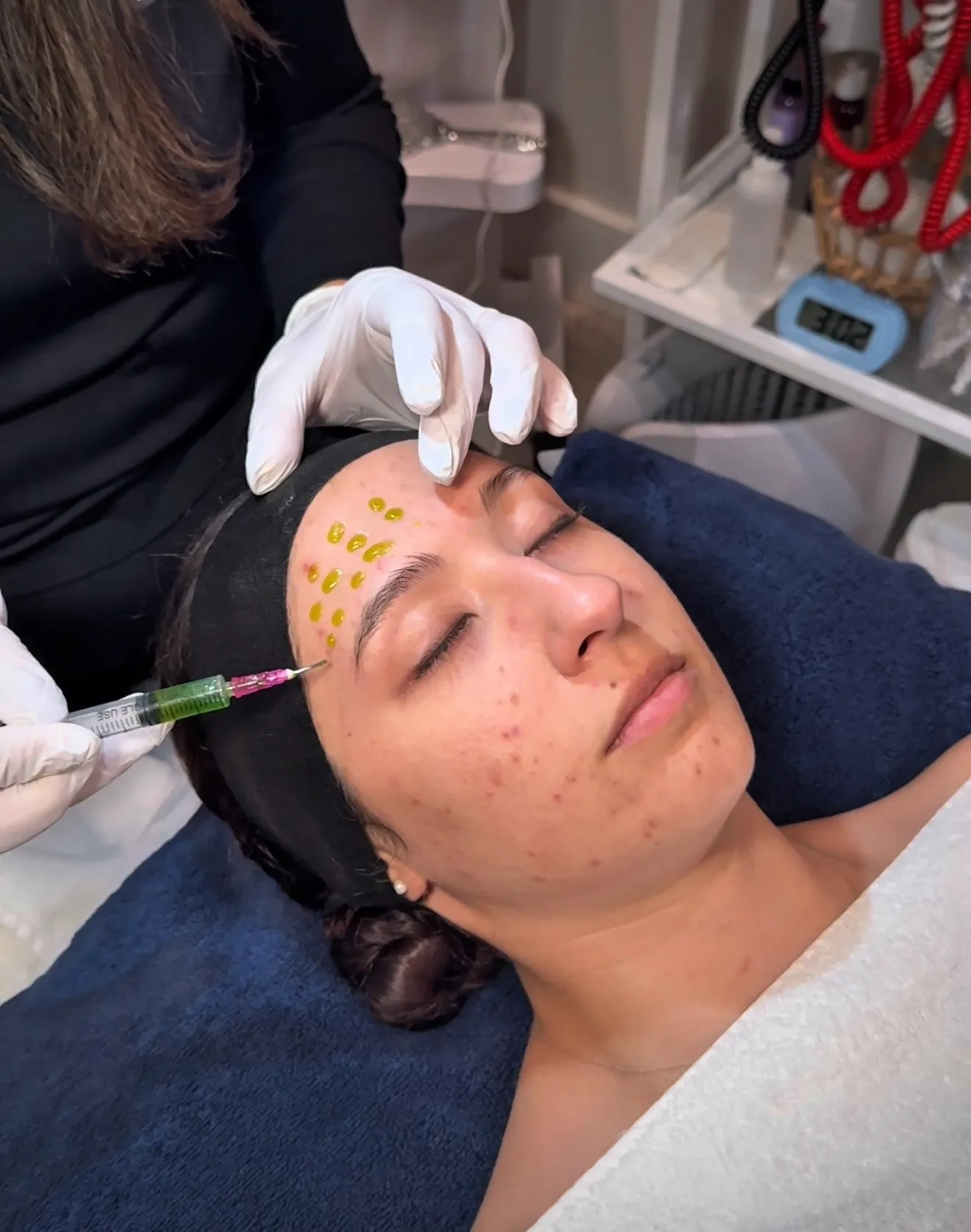
BioRePeel is designed around a biphasic formulation. At OC Skin Care Center, BioRePeel combines 30% trichloroacetic acid with vitamins, amino acids, and revitalizing ingredients to improve the appearance of tone and texture with little to no downtime for many clients. It may be performed as a series or integrated into a broader treatment plan.
That does not mean BioRePeel is automatically the best choice for every person or every concern. It may be a practical discussion for someone who wants to address dullness or uneven texture while limiting visible recovery, but the provider still needs to check the skin's barrier, sensitivity, pigment response, and current products.
It is also important not to confuse a lower-downtime plan with a risk-free plan. Temporary redness, sensitivity, tightness, or flaking can still occur. A thoughtful provider will explain what is normal, what should prompt a call, and how to protect the skin while it recovers.
For details on the treatment that OC Skin Care Center currently offers, visit the OCSC chemical peels and BioRePeel service page. The broader advanced skin treatments guide explains how peels fit alongside microneedling, PRP, and polynucleotide options.
Is VI Peel stronger than BioRePeel?
There is no universal answer to whether VI Peel is stronger than BioRePeel. The meaningful comparison depends on the exact VI Peel version, how the provider applies it, the intended depth, and the condition of the skin being treated. A peel that creates more visible peeling is not automatically a better choice.
Some people may be comfortable planning for several days of visible peeling when pigment or acne-related concerns are the priority. Others may prefer a more gradual, lower-recovery approach for maintenance, dullness, or an upcoming schedule. Neither preference is inherently better. The right decision balances the desired correction with the skin's ability to tolerate the plan.
Be cautious with any comparison that promises dramatic results, guarantees a specific number of peeling days, or treats all VI Peel formulas as identical. Ask the provider to identify the exact product, explain the expected recovery, and describe the alternative if your skin is currently sensitized.
Which chemical peel is best for your skin concern?
The best chemical peel is the one that addresses the concern while respecting your skin's sensitivity, barrier, pigment risk, and ability to follow aftercare. A provider may discuss different approaches for dullness, uneven tone, acne-related congestion, early lines, or texture, but the final recommendation should be individualized rather than based on a product name alone.
| Primary concern | What to discuss with your provider |
|---|---|
| Dullness or a tired-looking complexion | Whether a superficial or lower-recovery peel can refresh tone without over-exfoliating. |
| Uneven tone or sun-related discoloration | How the plan accounts for sun exposure, pigment history, sunscreen use, and the possibility of post-inflammatory pigmentation. |
| Acne or congestion | Whether active breakouts, inflammation, scarring, and your current acne products change the safest approach. |
| Fine lines or rough texture | Whether a peel alone is appropriate or whether a broader plan should include home care or another professional treatment. |
| Sensitive or recently irritated skin | Whether to postpone treatment and first restore comfort and barrier function. |
| An upcoming event | How much time is available for possible redness or peeling, and whether a conservative plan is more sensible. |
Melasma and post-inflammatory pigmentation deserve particular care. A peel may be part of a plan for some people, but pigment can worsen when treatment is too aggressive or aftercare is inconsistent. A qualified provider should review your history and set realistic expectations rather than promise a guaranteed result.
How much downtime should you expect after a chemical peel?
Downtime depends on the peel's depth, formulation, application, your skin's response, and the aftercare plan. A lighter peel may cause temporary warmth, redness, tightness, or subtle flaking. A deeper or more corrective treatment may involve more visible peeling and a longer period of sensitivity. Your provider should explain the expected range before treatment.
Aftercare commonly centers on protecting and calming the skin. Follow the instructions you receive, use a gentle cleanser and moisturizer when advised, protect your skin from the sun with a broad-spectrum sunscreen, and do not pick or pull at peeling skin. Do not restart retinoids, exfoliating acids, or other active products until your provider tells you to do so.
The American Academy of Dermatology notes that recovery can range from about a day for lighter peels to two weeks or longer for deeper peels, and that repeat treatments may be recommended depending on the goal. That range is why a fixed timeline should not be promised without knowing the treatment plan. Review the AAD's chemical peel aftercare and safety guidance.
Explore OCSC's customized facial and skin-health treatments if you are still deciding how a peel fits into your broader routine.
What is it like to get a chemical peel at OC Skin Care Center?
At OC Skin Care Center in Newport Beach, chemical peel planning is centered on your skin condition, goals, and desired downtime. The OCSC team offers BioRePeel and customized chemical peel options selected based on the client's skin condition, concerns, goals, and desired downtime, with the service page noting that peels may be performed as a series or combined with other treatments when appropriate.
A consultation should clarify your main concern, current routine, recent sun exposure, past reactions, and any medications or treatments that may affect your skin. Your provider can then explain which option is appropriate, what the appointment involves, and what aftercare will be needed. If another treatment or a home-care adjustment is a better first step, a personalized plan should make that clear.
For readers who want a starting point before scheduling, the complimentary Tangent AI assessment takes approximately two minutes, and the personalized Skin Roadmap is typically delivered within 24 to 48 hours. It is designed to connect skin concerns with product and treatment guidance rather than push every reader toward the same service.
Contact OC Skin Care Center in Newport Beach to discuss your chemical peel options
Frequently asked questions about chemical peels in Orange County
Can a chemical peel help with acne?
A chemical peel may be considered for some acne and congestion concerns, but it is not appropriate for every type or stage of acne. Active inflammation, current products, skin sensitivity, and the risk of discoloration should be reviewed before treatment.
Is BioRePeel safe for sensitive skin?
BioRePeel may be appropriate for some people with sensitive skin when it is properly assessed and customized, but sensitivity is not a reason to skip the consultation. A provider should evaluate the current barrier and postpone treatment if the skin is irritated.
Will my face peel after BioRePeel?
OC Skin Care Center describes BioRePeel as having little to no downtime, but individual redness, tightness, or flaking can vary. Ask your provider what visible changes are realistic for your specific skin and application plan.
Can I get a chemical peel before an event?
Possibly, but the timing should be discussed with your provider. Even a lower-recovery peel can produce temporary redness or sensitivity, so choosing a treatment immediately before an important event may not be appropriate.
How often should I get a chemical peel?
There is no universal schedule. Timing depends on the peel, your concern, skin response, home care, and provider recommendations. A series may be suggested for some goals, while another person may need more time between treatments.
Are chemical peels suitable for every skin tone?
Many people can be treated safely when the peel and technique are selected carefully, but pigment risk varies. Discuss your skin tone, history of discoloration, and sun exposure with a qualified provider before treatment.
Start with the right chemical peel conversation
Choosing a chemical peel in Orange County should be a guided decision, not a race to the strongest-sounding option. BioRePeel, VI Peel, and traditional TCA approaches each have a different planning context, and your skin's condition should determine the next step.
Request your complimentary Personalized Skin Roadmap from OC Skin Care Center to begin with education and individualized guidance.