

Learn about microneedling for acne scars in Orange County, including scar types, session planning, aftercare, and realistic results at OCSC.
Microneedling for Acne Scars in Orange County: What to Expect
Sep 22, 2026

Acne scars are not all shaped or formed in the same way. A treatment plan should begin with your skin's texture and behavior, not a preset number of sessions. Microneedling uses controlled microchannels to support gradual improvement in the appearance of certain scars and uneven tone. A systematic review found improvement in acne scar appearance across all 33 evaluated articles. The American Academy of Dermatology notes that microneedling can help fade scars and improve uneven skin tone.
Explore your Personalized Skin Roadmap
For people considering microneedling for acne scars in Orange County, the number of sessions depends on scar type, depth, active acne, skin sensitivity, and how your skin responds. Many acne-scar plans involve a series of treatments spaced over several months, but your provider should determine the timing after an individualized assessment.
Understanding which scar patterns may respond, and which concerns require a different approach, is the first step toward setting realistic expectations. For broader context, explore OCSC's advanced skin treatment options before considering which path may fit your goals.
Which Acne Scars Can Microneedling Improve?
Acne scarring is not one uniform condition. Some people have a change in skin texture caused by lost or uneven collagen, while others mainly have lingering color after a breakout. The distinction matters because microneedling is intended to improve the appearance of selected scars and uneven tone, not erase every mark or replace treatment for active acne.
Atrophic scars are depressions in the skin. Rolling scars have broad, gently sloping edges that create an uneven or shadowed appearance. Boxcar scars are wider depressions with more clearly defined, often squared-off borders. Ice-pick scars are narrow and deeper, with a small opening that extends farther into the skin. These patterns can occur together, and their depth and distribution influence whether microneedling is appropriate as one part of a treatment plan.
| Concern | Pattern | Possible fit |
|---|---|---|
| Rolling scars. | Wide, shallow depressions. | May improve texture. |
| Boxcar scars. | Defined depressions. | May soften appearance. |
| Ice-pick scars. | Narrow, deeper depressions. | May need other options. |
| Post-inflammatory marks. | Flat color changes. | May improve uneven tone. |
Active acne is different from an established scar. Inflamed or infected breakouts may need to be brought under control before treatment is planned, particularly if new lesions are widespread or tender. Picking can also create additional marks and prolong inflammation. A provider should assess the current skin condition, sensitivity, scar pattern, and goals before recommending a series.
Evidence supports microneedling as a minimally invasive option for acne scarring, but that finding does not mean every scar responds in the same way or that results are guaranteed. The American Academy of Dermatology notes that microneedling can fade scars and improve uneven skin tone. At OCSC's microneedling treatments in Orange County, candidacy and treatment details should be personalized rather than selected from a generic scar chart.
Read the systematic review on PubMed and review the American Academy of Dermatology's microneedling guidance for additional context.
Is Microneedling a Good Treatment for Acne Scars?
For many people, microneedling can be a good treatment option for acne scars, particularly when the goal is to soften uneven texture and create a more even-looking surface. It is a minimally invasive approach that uses controlled microchannels to support the skin's remodeling response. The degree of improvement varies by person and treatment plan, so the PubMed review should be understood as evidence of potential benefit, not a guarantee of a specific outcome.
That evidence supports realistic optimism, not a promise of complete removal. Acne scars form in different patterns and depths, and microneedling does not erase every scar. Rolling scars may respond differently from deeper boxcar or ice-pick scars. A provider may also distinguish true textural scarring from post-inflammatory marks, which are changes in color rather than depressions in the skin. The right approach depends on what is actually causing the uneven appearance.
Your current skin condition matters
Active acne can influence when treatment should begin. If breakouts are ongoing, the first priority may be to bring inflammation under better control before focusing on residual scarring. Treating irritated or sensitized skin also requires care. Your provider will consider sensitivity, previous reactions, current products, skin tone, and your tolerance for recovery when deciding whether microneedling is appropriate and how conservatively to approach it.
Skin tone deserves thoughtful attention, too. Microneedling may help improve the appearance of uneven tone as well as scars, according to the American Academy of Dermatology. However, any procedure that stimulates the skin should be planned with attention to how your skin tends to respond after irritation or inflammation. A personalized assessment helps your provider identify precautions and set expectations that fit your skin, rather than applying a generic protocol.
What a good outcome looks like
For one person, success may mean that light catches a scarred area less noticeably. For another, it may mean smoother makeup application or greater comfort with bare skin. Texture changes can be gradual, and a series may be considered rather than a single treatment. The depth and type of scarring, current acne, skin response, and personal goals all shape the recommendation. Microneedling for acne scars in Orange County should therefore begin with an evaluation, not a fixed promise of how many treatments you will need or exactly how much improvement you will see.
How Meta Therapy Microneedling Addresses Scar Texture
Acne-scar texture is not simply a matter of uneven color. Some scars create shallow depressions or changes in the skin's surface that remain visible when light moves across the face. Microneedling approaches this texture by creating controlled microchannels in the skin. These channels initiate a wound-healing response that can support collagen production and gradual remodeling, rather than attempting to conceal the scar temporarily.
At OC Skin Care Center, OCSC's Meta Therapy microneedling is positioned as a precision treatment for concerns such as mild acne scarring, uneven texture, enlarged pores, and dullness. The goal is a healthier-looking, more even surface. It is improvement over time, not a promise that every scar will disappear.
Why controlled microchannels matter
The treatment creates many small, controlled channels rather than treating the entire surface in the same way. This gives your provider a way to plan treatment around the condition of your skin, the depth and pattern of scarring, sensitivity, and your goals. A consultation is important because active acne, irritation, pigmentation concerns, and different scar patterns may call for different timing or treatment approaches.
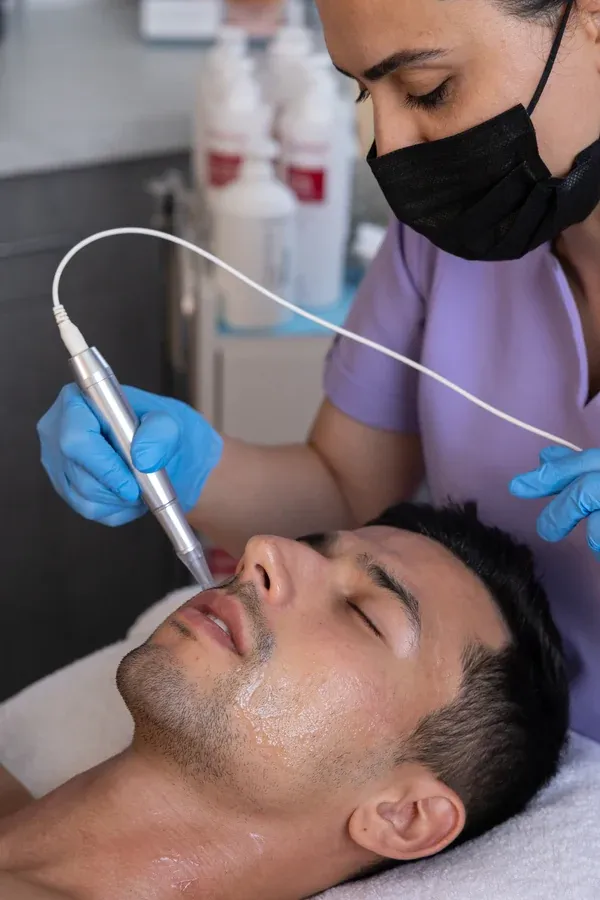
Meta Therapy uses cone-shaped polycarbonate tips designed to support consistent depth control. The system's listed penetration range is approximately 0.2 to 0.5 millimeters, but that range should not be interpreted as a universal setting or a recommendation for every person. Your provider determines the appropriate approach based on your skin's response and the area being treated.
What customization can and cannot do
Customization helps keep the treatment focused on the specific texture being addressed while respecting the surrounding skin. It also allows the plan to account for how your skin heals. Some people may be better candidates after active breakouts or inflammation are controlled, while others may need a different modality for deeper or sharply defined scars. Professional assessment helps set realistic expectations before a series begins.
As collagen remodeling takes place gradually, visible changes may develop over multiple treatments rather than immediately. Your trained OCSC team can explain whether Meta Therapy is appropriate on its own or whether another option should be considered. For broader context on local advanced skin treatment options, review the center's general microneedling guide, then return to a personalized discussion of your scar texture and goals.
How Is Microneedling for Acne Scars in Orange County Planned?
There is no single session count that fits every person. Acne-scar texture, scar depth and pattern, skin sensitivity, active breakouts, and your response to treatment all influence the plan. Acne-scar treatment may involve a series of sessions, with the number and spacing determined by the individual's scar pattern, skin response, treatment approach, and provider recommendations.
- Begin with an individualized assessment. Your provider first evaluates the type and depth of scarring, your current skin condition, sensitivity, medical history, and goals. Active acne or irritation may need attention before treatment. This assessment helps determine whether microneedling is suitable and whether another or additional approach should be considered.
- Plan a series with space between sessions. Acne-scar treatment may involve a series of sessions, with the number and spacing determined by the individual's scar pattern, skin response, treatment approach, and provider recommendations. The interval between treatments gives the skin time to recover and allows your trained OCSC team to evaluate how you respond. More frequent treatment is not automatically better, especially when the skin remains sensitive or inflamed.
- Expect gradual changes, not an instant correction. Microneedling creates controlled microchannels that support a remodeling process. Texture changes may become noticeable progressively across the series, while collagen remodeling continues after an individual appointment. Early improvement does not mean the process is finished, and results should be judged over time rather than immediately after treatment.
- Adjust the plan as your skin responds. Your provider may keep the schedule, modify the approach, extend the interval, or discuss another modality when that better fits your scar pattern and goals. OCSC's approach is personalized, so the initial range should not be treated as a guarantee of a particular result or a promise that scars will disappear completely. The goal is measured improvement in texture and overall skin appearance, with recommendations shaped around your individual response.
A consultation can clarify what a realistic series may look like for you in Orange County. The published evidence supports microneedling as a minimally invasive option for improving the appearance of acne scarring, but the right treatment plan still depends on professional assessment. Contact OC Skin Care Center to discuss your skin and next steps.
What Happens Before, During, and After Treatment?
Knowing what the appointment involves can make acne-scar treatment feel more straightforward. Your plan should be based on your skin condition, sensitivity, scar pattern, current acne activity, and goals rather than a one-size-fits-all protocol. At OC Skin Care Center in Newport Beach, the trained OCSC team uses that assessment to determine whether microneedling is appropriate and how the treatment should be approached.
-
Consultation and preparation
Before treatment, your provider reviews your medical and skin history, examines the areas of concern, and discusses your expectations. Active breakouts, irritation, recent procedures, medications, and your usual skin-care routine may all affect timing. Be prepared to share relevant products and treatments so your provider can give clear preparation instructions.
Do not begin, stop, or change prescription products on your own. Follow the instructions provided for your skin, and arrive with clean skin unless the practice gives different guidance. If your provider recommends postponing the appointment because your skin needs to settle, that is part of responsible treatment planning.
-
During the treatment
After the skin is prepared, the microneedling device is guided across the treatment area to create controlled microchannels. The technique and intensity are adjusted to the area being treated and to your skin's response. This is not a universal depth or setting, and your provider can explain what is appropriate for your acne-scar concerns.
The experience varies by person and treatment area. Tell your provider if you are uncomfortable so the appointment can be adjusted when possible. You can learn more about microneedling treatments in Orange County and the Meta Therapy approach before scheduling.
-
Immediately afterward
It is normal for treated skin to look flushed or feel sensitive after microneedling, but the degree and duration of these effects vary. Your provider will explain what to expect for your treatment and whether you should modify work, exercise, makeup, or other activities. OCSC notes that many clients return to normal activity the next day, although your individual guidance may differ.
-
Aftercare and follow-up
Use only the products and routine recommended by your provider while the skin recovers. Protect the treated area from sun exposure with the sun-protection approach you are given, and avoid picking, rubbing, or adding irritating active ingredients without approval. Contact the practice if your recovery seems unusual or you have concerns.
Follow-up helps your provider evaluate how your skin is responding and decide whether to continue, modify, or pause the plan. Improvement is gradual, and collagen remodeling continues over time. Because every client responds differently, your provider's aftercare and follow-up instructions take priority over general advice online.
Can PRP Be Combined With Microneedling for Acne Scars?
Yes. At OC Skin Care Center, microneedling may be performed with platelet-rich plasma (PRP) when that combination fits a client's skin condition and goals. PRP is prepared from a small sample of the client's own blood. The sample is processed to isolate platelet-rich plasma, which is then applied during the microneedling treatment.
Microneedling creates controlled microchannels in the skin. When PRP is included, it adds a concentrated biological component to the treatment rather than changing the basic purpose of microneedling. The OCSC Meta Therapy page describes this approach as using PRP's natural growth factors to support skin repair and renewal, while microneedling itself is used to stimulate collagen production and improve the appearance of texture and tone. You can learn more about the practice's PRP and PRF injections and how those services may fit into a broader treatment plan.
What PRP may add to the treatment
For someone concerned about acne-scar texture, PRP can be considered as an adjunct to a controlled microneedling treatment. The goal is to support an overall skin-renewal approach, not to promise that scars will disappear or that adding PRP will produce a particular result. Acne scars vary in depth, pattern, and response. A plan that is appropriate for rolling scars or uneven texture may not be the right approach for deeper or more sharply defined scars.
Why combination treatment is not automatically better
More components do not necessarily make a treatment more appropriate. Your provider should consider your current acne activity, skin sensitivity, medical history, scar characteristics, previous treatments, and desired outcome before recommending PRP. Some clients may benefit from microneedling alone, while others may be better served by a different modality or by addressing active breakouts before focusing on residual scarring.
OCSC's trained team uses professional assessment to individualize treatment planning. The practice's guidance is that individual plans vary, so the number and type of treatments should not be selected from a generic schedule. A consultation can clarify whether combining PRP with microneedling is a sensible option for your skin and whether the plan supports gradual, natural-looking improvement.
How Do You Maintain Acne Scar Treatment Results?
Maintaining progress after microneedling involves protecting the skin while it continues to respond to treatment. Results are not preserved by one product or one rigid routine. Your provider may adjust home care and follow-up based on your scar pattern, skin sensitivity, active acne, sun exposure, and how your skin responds between appointments.
Protect the skin from daily sun exposure
Broad-spectrum sunscreen is an important part of post-treatment skin care. Sun exposure can make uneven tone more noticeable and may work against the goal of creating a more even-looking complexion. Follow your provider's instructions about when to resume sunscreen after treatment, then apply it consistently as directed. Hats, shade, and other sun-protective habits can also be useful, particularly during extended outdoor time in Orange County.
Keep home care gentle and consistent
Use a gentle routine that supports the skin barrier rather than adding irritation. Your provider can advise which products and active ingredients are appropriate for your skin at each stage. Avoid introducing several new products at once, scrubbing treated areas, or increasing the strength or frequency of an active ingredient without guidance. If your skin becomes unusually irritated, pause and contact the practice for individualized direction instead of trying to correct the reaction with more products.
It is also important not to pick at acne, scabs, or areas of temporary unevenness. Picking can create additional inflammation and may contribute to new marks. Treating active breakouts and managing the habits that affect healing can be part of a broader plan, since ongoing acne may continue to create new discoloration or scarring.
Use follow-up visits to reassess the plan
Follow-up is not only about checking whether the skin looks smoother. It gives your provider an opportunity to assess changes in texture, tone, sensitivity, and active acne, then decide whether to continue, space out, or modify treatment. Acne scar improvement is individualized, and microneedling may not address every scar pattern equally. If certain areas remain resistant, another modality may be considered when appropriate. That decision should follow an assessment rather than a preset combination or promise of complete scar removal.
The American Academy of Dermatology notes that microneedling can fade scars and improve uneven skin tone, but realistic expectations remain essential. Learn more about microneedling and scar improvement from the AAD. To clarify which maintenance approach may fit your skin and goals, you can complete OCSC's Personalized Skin Roadmap. The assessment takes approximately two minutes, and the personalized roadmap is typically delivered within 24-48 hours.
Discuss your acne-scar treatment goals with OC Skin Care Center
Frequently Asked Questions
Does microneedling actually fix acne scars?
Microneedling can improve the appearance and texture of some acne scars, but it does not guarantee complete removal. A systematic review found improvement in acne scar appearance across all 33 evaluated articles, while the American Academy of Dermatology notes that microneedling can fade scars and improve uneven tone. Your expected outcome depends on scar pattern, depth, skin response, and whether active acne is present. Review the published evidence.
How many microneedling sessions are needed for acne scars?
Acne-scar treatment may involve a series of sessions, with the number and spacing determined by your scar pattern, skin response, treatment approach, and provider recommendations. Maintenance is also individualized, so the number of sessions should be determined after an assessment rather than treated as a universal prescription.
Is microneedling painful for acne scars?
Sensation and comfort vary by treatment area, skin sensitivity, and the treatment plan. During your consultation, your provider can explain what to expect and the preparation or comfort measures used by the practice. Tell the trained OCSC team about sensitivity, active irritation, or any concerns before treatment so the plan can be adjusted appropriately.
What is the downtime after microneedling for acne scars?
Downtime varies with treatment intensity and your individual skin response. Your provider will give specific aftercare instructions, including guidance on gentle skincare and protecting treated skin from sun exposure. Follow those instructions closely, and contact the practice if your response seems unusual or more intense than expected.
Can acne scars be 100% removed?
No treatment can promise that every acne scar will be completely removed. Microneedling is intended to support gradual improvement in texture and appearance, not erase every visible mark. A professional assessment can clarify which scars may respond, what improvement is realistic, and whether another treatment approach should be considered.
Ready to Explore a Personalized Acne-Scar Plan?
Acne-scar treatment is most useful when the approach reflects your scar pattern, skin needs, and goals. A personalized Skin Roadmap can help you understand which next steps may be appropriate before discussing treatment with our trained OCSC team. To get started, complete the Personalized Skin Roadmap, then use your results to guide a thoughtful conversation about your options.