

Facial volume changes can affect the cheeks, lips, and jawline. They can also change the way light falls across the face. Addressing them well requires more than choosing a product. The right approach depends on your anatomy, the treatment area, your goals, and the balance you want to preserve.
Explore personalized dermal filler options at OC Skin Care Center.
So, what are dermal fillers? They are gel-like substances injected under or into the skin to restore or add volume in selected areas. Hyaluronic acid is one common filler material, and results vary with the product, placement, and individual response.
Fillers are different from Botox, which temporarily reduces targeted muscle activity rather than replacing lost volume. This guide explains how filler treatment works, where it may help, and what it can feel like. It also covers how long results may last and why an individualized assessment matters before treatment. We will begin with the basics of filler composition and the way it supports facial structure.
What Are Dermal Fillers and How Do They Work?
If you are asking, "what are dermal fillers?" the simplest answer is that they are injectable materials used to create a smoother or fuller appearance in selected areas of the face. The FDA describes dermal fillers as injectable implants, while clinical sources describe them as gel-like substances placed into or beneath the skin. Depending on the treatment plan, filler may soften the appearance of lines, restore lost volume, or add subtle structure to a facial feature.
How filler creates a change in appearance
A provider places filler beneath the skin in a carefully selected location. The material occupies space where volume has diminished or where additional support may help balance the face. This can make a crease look less pronounced or improve the contour of areas such as the cheeks, lips, or lower face. The effect is not simply about adding more volume. The amount, placement, product characteristics, and your underlying tissue structure all influence how the result looks.
That is why a thoughtful treatment plan focuses on proportion rather than treating every visible line or hollow. The goal may be a refreshed, balanced appearance that still looks like you, not a standardized change applied to every face. You can review more about dermal filler treatment information from OC Skin Care Center.
Why hyaluronic acid is commonly used
Hyaluronic acid is a naturally occurring sugar in the body and is one of the most common materials used in fillers for wrinkles. In a gel form, it can provide temporary support and volume in the treatment area. OC Skin Care Center offers hyaluronic acid-based dermal fillers, but the appropriate product and amount still depend on your anatomy, the area being treated, and your goals. A professional assessment is important because the same product or volume is not appropriate for every person.
Filler versus muscle activity
Dermal fillers primarily address volume and contour. This is different from a neuromodulator such as Botox, which temporarily reduces targeted muscle activity. A line related to facial movement and a fold related to volume change may therefore require different approaches. Understanding that distinction helps explain why an injector evaluates your facial movement, tissue structure, and desired outcome before recommending treatment. At OC Skin Care Center, Negar Rad, FNP-C uses that individualized planning process to keep filler treatment aligned with natural-looking results rather than a one-size-fits-all formula.
What Types of Dermal Fillers Are Used?
Dermal fillers are not one interchangeable product. They are made from different materials, and each material has distinct properties that may make it more suitable for certain areas, concerns, and treatment goals. The main categories patients may hear about include:
- Hyaluronic acid: a gel-like material commonly used to restore volume or soften the appearance of lines.
- Calcium hydroxylapatite: a filler material that may support contour or volume in selected treatment plans.
- Poly-L-lactic acid: a manufactured material used in plans designed to restore volume gradually.
The right material depends on your anatomy, treatment area, goals, and provider assessment.
Hyaluronic acid fillers
Hyaluronic acid, often shortened to HA, is a naturally occurring sugar in the body and is the most common filler material used for wrinkles, according to the Mayo Clinic. HA fillers are gel-like and can be used to help restore volume or soften the appearance of lines. The consistency can vary, which matters when a provider is planning treatment in a delicate area versus an area where more structure or support is desired.
OC Skin Care Center offers hyaluronic acid-based dermal fillers. The practice's approach is not to select a product based on a trend or a one-size-fits-all formula. Instead, the provider considers the patient's facial structure, the treatment area, the degree of volume change, and the desired level of refinement. When clinically appropriate, hyaluronic acid filler can also be dissolved with hyaluronidase, an enzyme used by providers in specific situations.
Calcium hydroxylapatite
Calcium hydroxylapatite is another filler material described by the Mayo Clinic. It may be used for purposes such as jawline contouring, restoring cheek volume, or addressing deeper wrinkles and folds. Its properties can make it useful when a treatment plan calls for support or contour in a particular part of the face. That does not mean it is the right choice for every patient or every area. Placement, amount, and suitability require an in-person assessment.
Poly-L-lactic acid
Poly-L-lactic acid, also called PLLA, is a manufactured material that is slowly absorbed by the body. Rather than functioning only as an immediate gel-like correction, it may be used in plans intended to restore facial volume gradually. Because Poly-L-lactic acid treatments may involve a series of sessions, the treatment timeline can differ from a single-session filler approach. Your provider should explain what kind of change is realistic and how follow-up would be planned.
How is the material selected?
Material selection depends on more than the name of a filler. The underlying anatomy, the location being treated, the amount of volume needed, the tissue structure, and the patient's goals all influence the recommendation. The FDA notes that results depend in part on the underlying tissue structure and the volume and type of filler used. The provider also considers whether the goal is subtle contour, support, restored volume, or softening of a line.
At OC Skin Care Center, Negar Rad, FNP-C evaluates these factors before recommending an approach. Learning about the categories can help you ask better questions, but it should not be used to choose a material independently. A personalized assessment is the appropriate way to determine whether a filler treatment fits your anatomy and goals.
Where Can Dermal Fillers Be Used?
Dermal fillers can be used in several facial areas where a person may want to restore volume, soften the appearance of folds, or refine balance and definition. The FDA lists areas including the cheeks, lips, chin, and nasolabial folds among facial filler uses. The areas patients most often ask about include:
- Cheeks and midface, where carefully chosen volume may support facial balance.
- Lips and the area around the mouth, where treatment may refine definition or address selected concerns.
- Chin and jawline, where filler may support contour and proportion.
Not every filler is appropriate for every area or every patient. Product selection, facial anatomy, existing volume, and treatment goals all influence the plan.
At OC Skin Care Center, treatment planning is centered on proportion and natural-looking results. The goal is not to fill every line or add volume simply because an area can be treated. A thoughtful assessment helps determine whether filler is likely to support the result you want, whether another approach may be more suitable, or whether treatment should be deferred.
Cheeks and midface
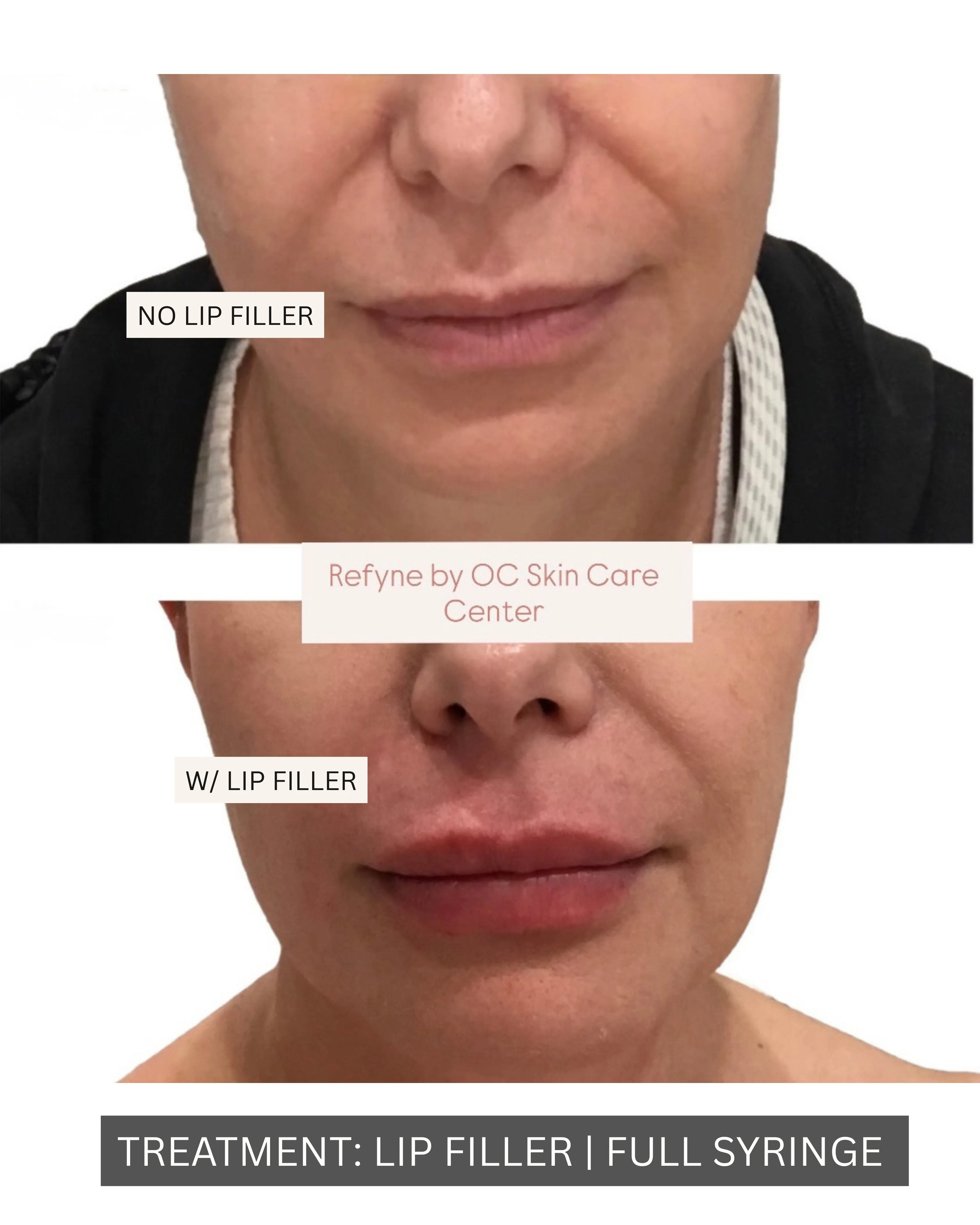
Filler may be used in the midface for cheek augmentation and volumization. Adding or restoring carefully chosen volume in this region can help support the overall balance of the face and improve the relationship between the cheeks and lower face. The amount and placement matter. Overcorrection can make the result look less natural, so an individualized plan is more important than copying a particular trend or result seen online.
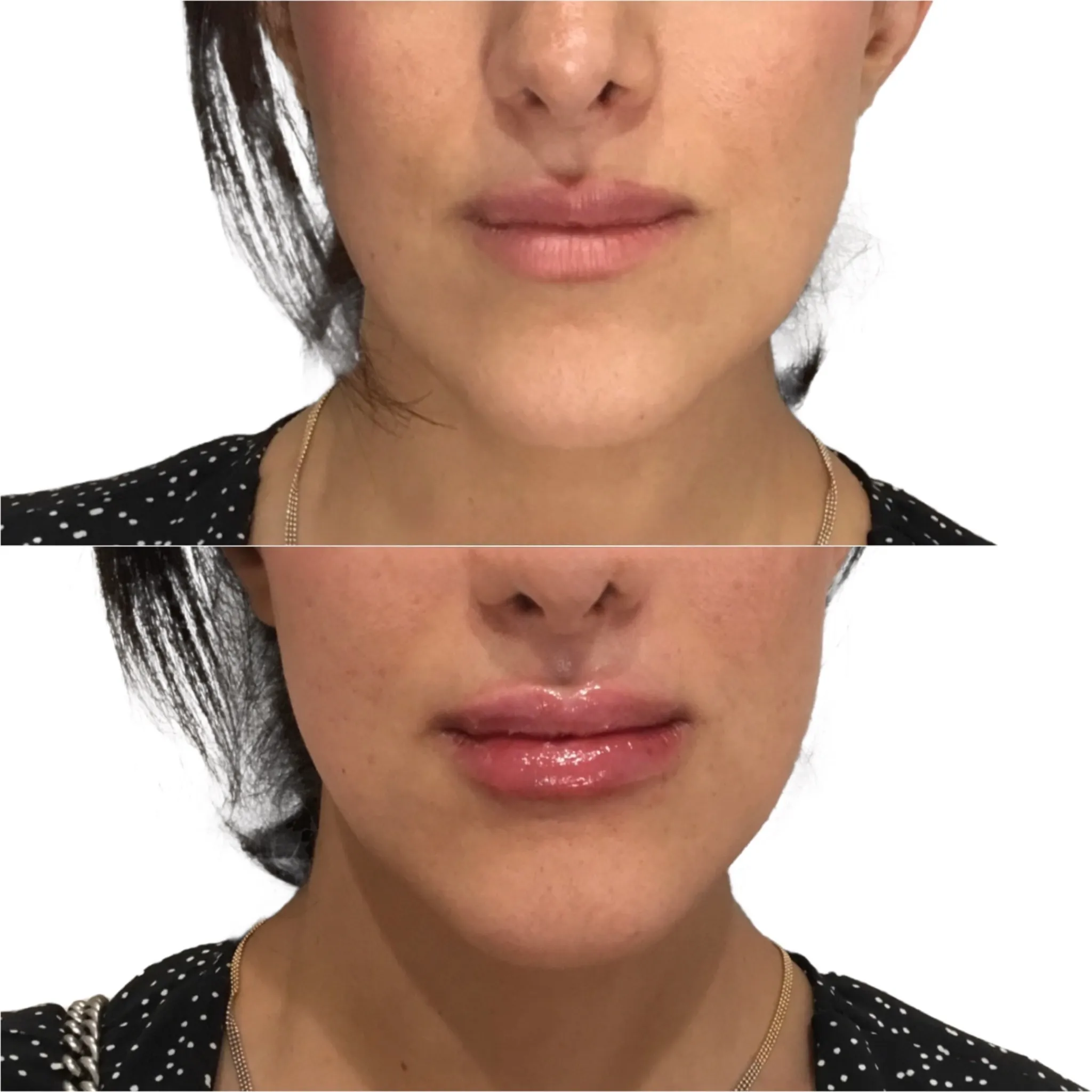
Lips and the area around the mouth
Lip filler may be used to enhance definition or add volume when that fits the patient's anatomy and goals. Treatment can also address the perioral area, which is the region around the mouth. Nasolabial folds, sometimes called smile lines, are another documented area for filler treatment. These folds can have different causes and degrees of prominence, so the best plan is not always to inject directly into the most visible line. Your provider may evaluate surrounding facial structure before recommending an approach.
Chin and jawline
In the lower face, filler may be used for chin augmentation or jawline contouring and definition. The purpose may be to improve facial balance, clarify the transition between the chin and jaw, or address volume changes that affect the lower face. These treatments require attention to the face as a whole. Chin or jawline filler should not be planned in isolation from facial proportions, profile, and the patient's desired level of change.
Under-eye areas require careful evaluation
Providers commonly inject fillers in regions around the eyes, mouth, and nose, but the under-eye area is not automatically appropriate for filler. The skin is delicate, and concerns such as hollowness, puffiness, pigmentation, and skin texture can have different causes. A careful evaluation is needed to determine whether filler is a reasonable option, whether another treatment would be more appropriate, or whether it is best avoided.
To learn more about personalized injectable care, speak with the OCSC team about your anatomy, goals, and candidacy. A consultation with Negar Rad, FNP-C can help clarify which areas, if any, fit an education-first treatment plan.
What Does a Dermal Filler Treatment Feel Like?
A dermal filler appointment typically begins with a conversation rather than an injection. Your provider will discuss what you would like to address, examine your facial structure, and explain which product, amount, and placement may suit your anatomy and goals. This assessment matters because filler results depend partly on the underlying tissue structure, as well as the type and volume of filler used. It also gives you an opportunity to ask questions and decide whether treatment feels appropriate for you.
At OC Skin Care Center, Negar Rad, FNP-C, provides individualized dermal filler care. You can review the practice's dermal filler treatment information before your appointment, but your provider's assessment should guide decisions about candidacy, product selection, and aftercare.
What happens during the appointment?
Before the filler is placed, the treatment area is prepared and a numbing medicine may be used to support comfort. During injection, you may notice pressure, a brief pinching or stinging sensation, and fullness as the product is placed. The experience can vary by treatment area, product, injection technique, and individual sensitivity. So it is more accurate to discuss comfort measures than to promise a single experience for everyone.
Dermal filler treatment is typically performed during an in-office appointment, with treatment time and recovery varying based on the area treated, product used, and individual treatment plan. Even when you feel ready to resume normal activities, your provider will explain what to expect as the area settles and what aftercare is appropriate for your treatment.
What reactions are normal, and what risks should you understand?
Short-term reactions can include swelling, tenderness or pain, bleeding, bruising, itching, rash, or infection. These possibilities do not mean a complication will occur, but they are important to discuss before treatment. Your provider can explain which changes are expected and when you should contact the practice.
Rare but serious complications can occur if filler is accidentally injected into a blood vessel. This can cause tissue death, stroke, or blindness. That is one reason professional assessment, careful technique, and an appropriately trained injector matter. At OCSC, hyaluronidase may be offered to dissolve hyaluronic acid filler when clinically appropriate, including in the management of an unwanted result or complication. It is not a substitute for careful planning, and it does not mean every concern can be addressed the same way.
Rather than choosing filler based only on a trend or a single photo, ask how the treatment fits your facial anatomy and goals. A calm consultation with your provider helps set realistic expectations and keeps the focus on balanced, natural-looking results.
Start with a Personalized Skin Roadmap for guidance tailored to your skin and treatment goals.
How Long Do Dermal Fillers Last?
There is no single expiration date for every filler treatment. Longevity depends on the material selected, where it is injected, the amount and structure being treated, and how your individual body responds. The FDA notes that the duration of a filler effect depends on the filler material, the injection area, the underlying tissue structure, and the volume and type of filler used. FDA guidance on dermal fillers provides helpful general context, but it cannot predict an individual result.
For hyaluronic acid fillers, Mayo Clinic gives a general estimate of approximately six to 12 months. OC Skin Care Center describes a broader general range of six to 18 months, depending on the anatomical location and the product's rheology, or how the material behaves in the tissue. These ranges are educational estimates, not guarantees. A filler placed in a more mobile area may experience different conditions than one used for structural support in another area. So the same product may not last identically for every treatment or patient.
Individual response matters as well. Facial anatomy, tissue characteristics, movement in the treatment area, product selection, treatment volume, and personal goals all influence how a result looks and how long it remains noticeable. A careful plan is designed around your features rather than a calendar promise. At OC Skin Care Center, Negar Rad, FNP-C can assess the area you want to address and discuss whether the expected duration is consistent with your priorities for balanced, natural-looking results.
Because many fillers are gradually absorbed by the body, some patients choose repeat treatment when the effect has softened and they still want the same type of improvement. Maintenance should not be treated as a fixed schedule. The appropriate timing depends on what remains, how you feel about the result, and whether your anatomy or goals have changed. A follow-up assessment can help determine whether additional filler is appropriate, whether waiting makes more sense, or whether another approach better fits your needs.
Understanding dermal filler treatment information is a useful starting point, but an individualized evaluation is the best way to set realistic expectations about longevity.
What Is the Difference Between Fillers and Botox?
Dermal fillers and Botox are both injectable treatments, but they address different aspects of facial movement and structure. Fillers are injected under the skin to restore or add volume. Botox is a neuromodulator that temporarily reduces targeted muscle activity. That distinction matters because a concern that looks similar in the mirror may have a different underlying cause.
| Consideration | Dermal fillers | Botox |
|---|---|---|
| How it works | Adds or restores volume beneath the skin, which can support facial contours or soften the appearance of areas affected by volume loss. | Temporarily reduces activity in selected muscles, which can soften lines related to repeated facial movement. |
| Common goals | Support areas such as the cheeks, lips, chin, or lower face when added structure or volume is part of the treatment plan. | Reduce the appearance of movement-related lines by limiting targeted muscle contraction. |
| Planning considerations | The product, amount of volume, treatment area, anatomy, and desired degree of correction all influence the recommendation. | The muscle being treated, its activity, the location of the lines, facial anatomy, and the desired degree of movement all influence the recommendation. |
For a fuller overview of the treatment approach, see OCSC's how Botox differs from fillers and compare it with the practice's dermal filler treatment information.
Why the right choice depends on the concern
Some facial changes are primarily related to movement, while others reflect a change in volume or contour. For example, a provider may consider Botox when repeated muscle activity contributes to a line. Fillers may be discussed when restoring support or volume is more relevant. These categories are useful for understanding the treatments, but they are not a substitute for an assessment.
In some cases, a provider may discuss one treatment or both. The decision depends on your anatomy, the way your facial muscles move, the area being treated, and the result you want to maintain. At OC Skin Care Center, Negar Rad, FNP-C can help explain which approach is appropriate for your features and goals, with attention to balanced, natural-looking results rather than treating every concern the same way.
Get Your Personalized Skin Roadmap before deciding whether fillers fit your goals.
Frequently Asked Questions
What are dermal filler injections?
Dermal filler injections place a gel-like substance into or beneath the skin to restore volume, soften lines, or enhance features such as the lips and cheeks. Hyaluronic acid is a common filler material and is a naturally occurring sugar in the body. The appropriate product, amount, and placement depend on your facial structure and goals. The FDA explains how dermal fillers are used.
What is the downside of dermal fillers?
Temporary swelling, tenderness, bruising, itching, rash, bleeding, or infection can occur after treatment. A rare but serious risk is accidental injection into a blood vessel, which can cause tissue damage, blindness, or stroke. A careful consultation helps review your health history, anatomy, goals, and whether filler is appropriate. Results are also not permanent, so some people choose maintenance treatment as the material is absorbed over time.
How long do dermal fillers really last?
Longevity varies by the filler material and the area treated. Hyaluronic acid filler results may last approximately 6 to 12 months, while OC Skin Care Center provides a broader general estimate of 6 to 18 months depending on the product, treatment area, and individual response. These are educational ranges, not guarantees. Your provider can explain what may be realistic for your treatment plan. The FDA notes that material and injection area affect duration.
Are dermal fillers better than Botox?
Neither is universally better. Fillers restore or add volume, while Botox temporarily reduces targeted muscle activity. Filler may be considered for volume loss or facial contour, whereas Botox may address movement-related lines. Your anatomy, concerns, and desired result determine which approach, if any, makes sense. A qualified provider can also discuss whether using one treatment or a carefully planned combination supports a balanced result.
Ready to Explore Whether Fillers Fit Your Goals?
Choosing dermal fillers is a personal decision shaped by your anatomy, facial goals, and preferences. Personalized guidance can help you understand which options may support balanced, natural-looking results and whether treatment is appropriate for you. For personalized guidance, call (949) 767-7870 with questions about your goals, anatomy, and treatment options.
Request your Personalized Skin Roadmap from OC Skin Care Center.