

Chemical Peel vs. Microneedling for Texture: Comparing Approaches

If you are asking, “what does a chemical peel do?” because your skin looks rough, dull, or uneven in texture, the most useful answer is not simply “it exfoliates.” A professional peel uses a selected chemical solution to create controlled exfoliation, while microneedling creates controlled micro-channels that support skin renewal and collagen stimulation. The better option depends on what is contributing to the texture, your current skin condition, your goals, and the downtime you can accommodate.
Call (949) 767-7870 to discuss your skin goals
What does a chemical peel do for skin texture?
A chemical peel applies a professional solution to the skin so that selected surface layers are exfoliated in a controlled way. Depending on the formula, intended depth, application, and individual response, a peel may help improve the appearance of rough texture, uneven tone, dullness, or some forms of discoloration. It is not a universal resurfacing treatment, and visible peeling is not guaranteed.
The word “peel” describes a category rather than one identical procedure. Ingredients, concentration, treatment depth, preparation, and aftercare can differ. A superficial approach may focus more on surface renewal, while a deeper treatment involves more recovery planning. A provider should explain the specific peel being considered rather than asking you to choose based on a strength label or a promise about how much skin will shed.
For texture concerns, the important question is what kind of texture you are noticing. Roughness at the surface, dull-looking skin, uneven tone, and the appearance of shallow marks may lead to different conversations. Current irritation, dryness, active breakouts, past reactions, and the products in your routine also matter. A consultation can clarify whether a professional peel, a home-care adjustment, microneedling, or another next step better matches the concern. Review OC Skin Care Center’s personalized services as a starting point for questions.
What does microneedling do differently?
Microneedling uses a device to create controlled micro-channels in the skin. This controlled process supports collagen stimulation and overall skin renewal. Providers may discuss it when the concern includes uneven texture, the appearance of shallow acne scars, or fine lines, but suitability and the treatment approach must be individualized.
Microneedling is not simply a stronger chemical peel. It uses a different mechanism and has different planning considerations. Skin sensitivity, current condition, recent treatments, history of unusual responses, and the desired recovery window all help shape the discussion. Your provider should explain what service is being proposed, how it relates to your concern, and what aftercare may involve.
At OC Skin Care Center, Meta Therapy microneedling is described as a personalized service selected around the client’s skin condition, concerns, goals, and desired downtime. Read more about Meta Therapy microneedling before your appointment, but do not treat general service information as a personal recommendation.
What does a chemical peel do compared with microneedling for texture?
A comparison is most useful when it connects the treatment mechanism to the specific texture concern. Neither option automatically wins. A provider may recommend one, the other, a staged plan, a combination, a home-care change, or no procedure at that time.
| Comparison point | Chemical peel | Microneedling |
|---|---|---|
| Primary action | Uses a selected solution for controlled exfoliation at an intended skin depth. | Creates controlled micro-channels to support collagen stimulation and skin renewal. |
| Texture conversation | May be considered when surface roughness, dullness, uneven tone, or some discoloration is central to the concern. | May be considered when texture is connected with the appearance of shallow marks or fine lines, among other factors. |
| What shapes the plan | Formula, intended depth, skin condition, prior response, goals, and desired downtime. | Skin condition, sensitivity, treatment history, goals, area being treated, and expected recovery. |
| What to ask about recovery | Ask about sensitivity, redness, visible shedding, sun protection, and when to resume products. | Ask about temporary redness or sensitivity, aftercare, sun exposure, and when to resume products. |
| What it cannot promise | A particular amount of peeling or a guaranteed change in texture or pigmentation. | A guaranteed collagen response, scar improvement, or result based on another person’s experience. |
This table is a general educational framework, not a self-selection tool. The same word, such as “texture,” can describe different skin concerns. A provider needs to understand what you see, how long it has been present, how your skin currently feels, and what outcome would be meaningful to you.
For general background, the American Academy of Dermatology’s chemical-peel overview and the FDA’s consumer information on microneedling devices explain treatment categories and safety considerations. These resources support question-setting, not a personal treatment recommendation.
Explore customized chemical peel options at OC Skin Care Center
When might a chemical peel be part of the texture conversation?
A peel may be worth discussing when your main concern is a rough or dull surface, uneven-looking tone, or the appearance of discoloration that a provider believes may respond to controlled exfoliation. That does not mean every peel is appropriate for every skin type or concern. The formula and treatment depth should be selected after an assessment rather than copied from an online description.
OC Skin Care Center’s chemical peel service explains that the provider considers skin type, goals, and desired downtime when recommending a peel level. The service page also describes customized chemical peels and BioRePeel as options to discuss. Those descriptions can help you form questions, but they do not determine which option is right for your skin.
Texture can also reflect an unsettled barrier or an overly active routine. If your skin is tight, stinging, peeling from home products, or reacting to a recent change, adding professional exfoliation may not be the immediate next step. Tell the provider about the change and ask whether your skin should first be reassessed or your routine adjusted.
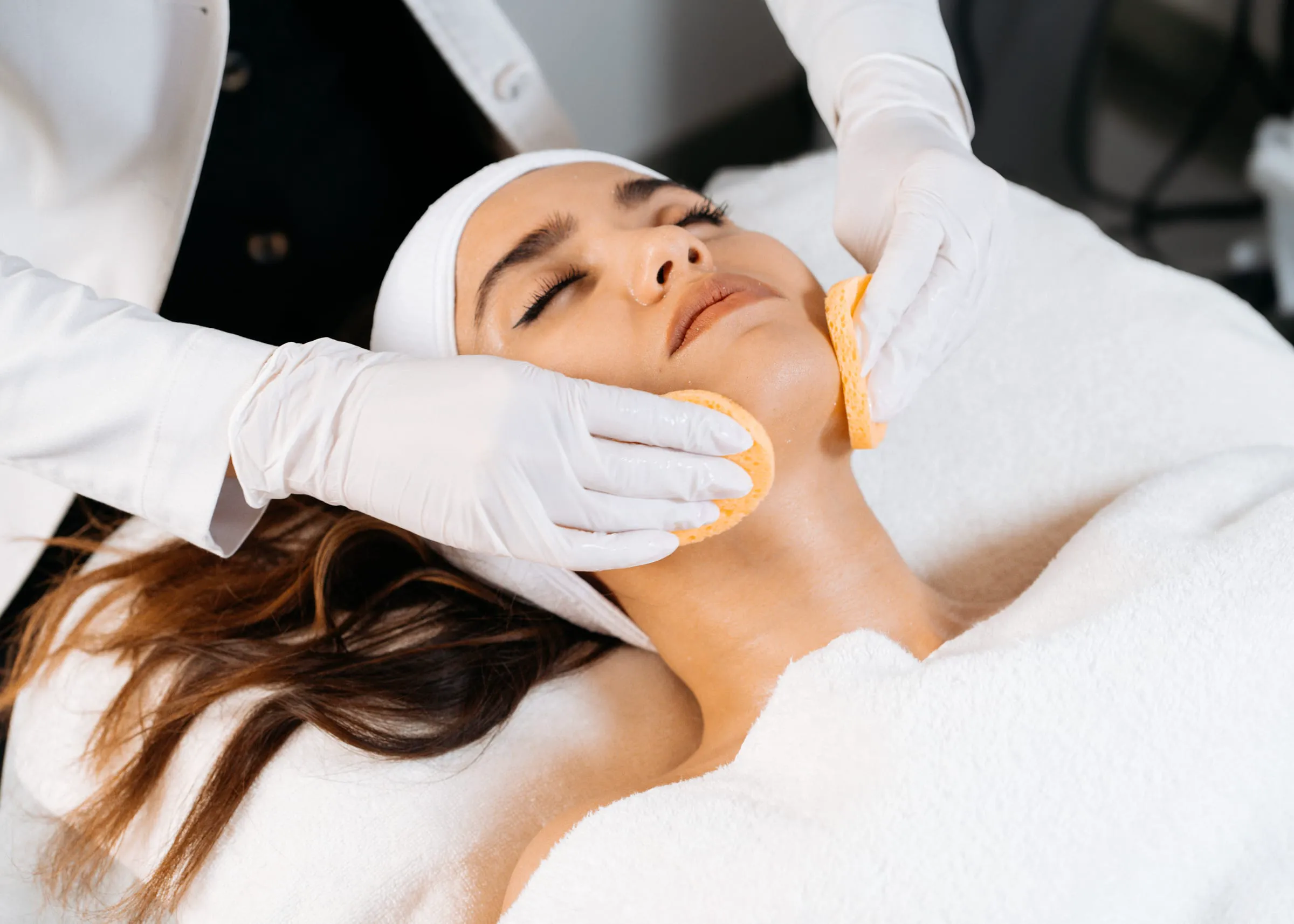
The image above illustrates a hands-on skin treatment and does not establish that a particular procedure, formula, or result is being shown. The exact service and technique should be explained during your own consultation.
When might microneedling be part of the texture conversation?
Microneedling may be discussed when the texture concern involves the appearance of shallow acne-scar marks, fine lines, or a less even surface that a collagen-supporting approach may address. It is still not a universal answer. A provider should consider whether your skin is calm enough for treatment, whether the concern matches the service, and whether the expected recovery fits your schedule.
Microneedling creates controlled micro-channels, so it should not be described as identical to exfoliation. Your provider can explain the intended treatment area, the approach being considered, the expected temporary effects, and the aftercare instructions. Avoid choosing a setting or schedule from a general online guide. Treatment cadence should be based on your skin’s response and the provider’s recommendations.
Recent sun exposure, active irritation, a history of prolonged discoloration, certain medications, or a prior unexpected response may be important to mention. Skin tone alone does not determine whether microneedling is appropriate. An individualized assessment is especially important when pigmentation changes are part of the concern.
How do downtime and aftercare affect the choice?
Downtime is not a side note. It can determine whether a treatment fits your life and whether you can follow the recommended aftercare. A peel may involve temporary sensitivity, redness, or visible shedding depending on the treatment. Microneedling may involve temporary redness or sensitivity. The exact experience varies with the plan and the individual, so ask about the service being proposed rather than relying on a generic timeline.
- Discuss your calendar: Mention travel, work events, celebrations, outdoor plans, and other dates before choosing an appointment.
- Share your routine: List prescription products, exfoliants, retinoids, and other active ingredients. Ask what to pause and when to resume them.
- Ask about sun exposure: Follow the provider’s broad-spectrum sunscreen and sun-care guidance, particularly around a treatment that may temporarily increase sensitivity.
- Clarify what is expected: Ask what sensations, redness, shedding, or sensitivity may be normal for the selected treatment and when to contact the practice with a concern.
- Plan for simplicity: Keep the days after treatment manageable and do not add new active products or try to speed visible shedding without specific guidance.
A plan that appears suitable for texture may not be suitable for your current skin condition or calendar. Choosing a different date, discussing a gentler first step, or waiting can all be reasonable parts of a professional treatment plan.
What should you ask before choosing between a peel and microneedling?
Bring the comparison back to your own skin rather than asking which treatment is best in general. Useful questions include:
- What is contributing to the texture I am noticing?
- Would you describe my concern as surface roughness, uneven tone, shallow marks, fine lines, or something else?
- What does the specific chemical peel or microneedling approach aim to address?
- Why does that option fit my current skin condition and goals?
- What temporary effects and aftercare should I plan for?
- Which products, recent treatments, medicines, or health history details should I share before scheduling?
- Would a home-care adjustment, facial, staged plan, or no procedure be a better first step?
- How will we decide whether a future treatment is still appropriate based on my skin’s response?
Clear answers should help you understand the reasoning and limitations of the plan. They should not promise that one treatment will produce the same result for every person. If the explanation is unclear, ask for it in plain language before deciding.
Call (949) 767-7870 for personalized treatment guidance
How does OC Skin Care Center help Newport Beach clients choose?
OC Skin Care Center is in Newport Beach and approaches treatment selection through professional assessment and personalized education. The team considers the client’s skin condition, concerns, goals, and desired downtime before deciding whether a chemical peel, microneedling, a home-care adjustment, or another option is the appropriate next step.
You can review the practice’s chemical peel service and Meta Therapy microneedling service to prepare questions. The pages are starting points, not a diagnosis or a promise of results. A useful appointment conversation should connect the proposed treatment to what you want to address and explain preparation, recovery, and aftercare.
If you are still defining your concern, the practice’s Personalized Skin Roadmap can help you organize your questions before speaking with the team. The complimentary Tangent AI assessment takes approximately two minutes, and the personalized roadmap is typically delivered within 24–48 hours. Professional guidance remains important when deciding whether a treatment fits your skin.
Contact OC Skin Care Center to discuss your next step
Frequently asked questions
What does a chemical peel do for rough skin?
A chemical peel uses a selected solution for controlled exfoliation, which may improve the appearance of roughness, dullness, uneven tone, or some discoloration depending on the treatment and the individual. It does not guarantee a specific result or amount of visible peeling.
Is a chemical peel or microneedling better for texture?
Neither is automatically better. A peel may be discussed for surface roughness or uneven-looking tone, while microneedling may be discussed for some texture concerns involving shallow marks or fine lines. The right choice depends on your skin condition, concern, goals, history, and desired downtime.
Can chemical peels and microneedling be combined?
Some treatment plans may stage or combine services, but that decision must come from a provider who understands your skin and the specific treatments. Do not combine exfoliating or device-based treatments based on a general online schedule.
Does microneedling remove the outer layer of skin?
Microneedling works differently from a chemical peel. It creates controlled micro-channels to support collagen stimulation and skin renewal rather than using a chemical solution for exfoliation. Your provider can explain the approach and aftercare for the service being considered.
How should I prepare for a texture consultation?
Write down your main concern, recent skin changes, current products, prior treatments and reactions, relevant health information, and important calendar dates. Ask what the proposed option may address, what it cannot promise, and what recovery or aftercare you should plan for.
A chemical peel and microneedling are different tools for different treatment conversations. If you are asking what does a chemical peel do, begin with the texture you want to understand, then let a qualified provider connect that concern with your skin condition, goals, and realistic next steps.
Call (949) 767-7870 to begin a personalized skin consultation