

Learn how microneedling with PRP in Orange County works, who it may suit, recovery considerations, and how OC Skin Care Center personalizes care.
Microneedling With PRP Orange County: What to Know
Oct 2, 2026

If you are researching microneedling with PRP in Orange County for skin texture, acne-scar appearance, uneven tone, or fine lines, the right treatment is not determined by a trend or a standard recipe. A thoughtful plan starts with your skin condition, goals, medical history, and desired downtime.
Start with a complimentary Personalized Skin Roadmap to organize your questions before discussing treatment.
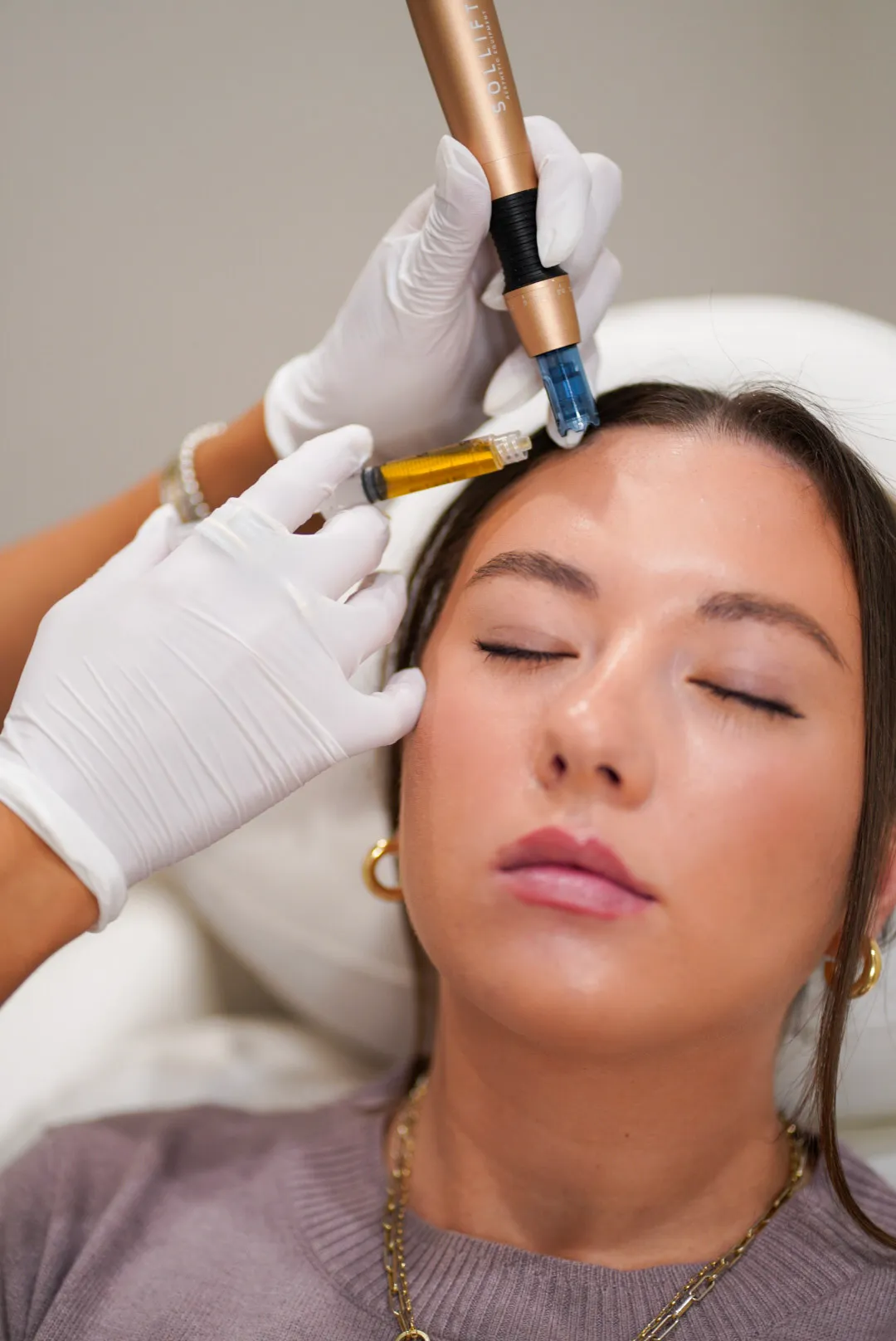
Microneedling with PRP combines controlled microneedling with platelet-rich plasma (PRP) prepared from the client's own blood. At OC Skin Care Center in Newport Beach, the treatment is personalized based on the client's skin condition, concerns, medical history, goals, and desired downtime, with a focus on supporting natural-looking improvements in skin texture and overall skin quality.
Understanding how each part may contribute to the treatment helps you evaluate candidacy and ask more informed questions. For broader background, explore our advanced skin treatment guide, then consider how the two approaches work together.
How microneedling and PRP work together
Microneedling uses a device to create controlled micro-channels in the skin. These channels create a temporary pathway through the outermost layer while prompting the skin's natural repair response. The treatment settings and areas should be selected according to the person's skin condition, concerns, and goals, rather than copied from a universal protocol.
PRP, or platelet-rich plasma, is prepared from a small sample of the person's own blood. After the sample is processed, the platelet-rich portion may be used as part of a treatment plan. Because PRP comes from the individual receiving care, the preparation is personal to that appointment. It is not a filler, and it should not be presented as a guaranteed source of new volume or a substitute for appropriate skin care.
When a provider determines that the combination is appropriate, PRP may complement microneedling's skin-renewal approach. Researchers have studied the combination particularly in relation to acne-scar appearance. A systematic review and meta-analysis found that microneedling or subcision with PRP produced statistically significant improvement in validated outcomes compared with the same approaches without PRP (PubMed systematic review and meta-analysis). Although the available studies were limited in number and design, that evidence can inform a conversation but cannot predict an individual's result.
For a focused explanation of device authorization and PRP, review the dedicated FDA guidance section below.
At OC Skin Care Center, microneedling with PRP is personalized according to the client's skin condition, concerns, goals, and provider assessment. Treatment details, candidacy, and expected recovery are reviewed individually so the plan can be appropriately tailored to the client.
What concerns can the combination treatment address?
The goals for microneedling with PRP in Orange County are usually related to overall skin quality rather than a single guaranteed result. Controlled micro-channels may support a smoother-looking surface, while PRP is considered as a personalized adjunct when a provider believes it fits the treatment plan. The right approach depends on the concern being treated, your current skin condition, and factors such as sensitivity, active inflammation, and desired downtime.
Texture and uneven tone
Some people explore this combination when their skin looks rough, dull, or uneven in tone. Treatment planning may focus on improving the appearance of texture and supporting a more even-looking complexion over time. However, uneven tone can have different causes, including post-inflammatory discoloration and sun-related changes. A professional assessment matters because the safest plan may involve home care, another treatment, or a staged approach instead of microneedling with PRP.
Acne-scar appearance
Acne-scar concerns can include uneven texture, shallow depressions, and lingering changes in the skin's appearance. A meta-analysis of controlled studies found that combined microneedling and PRP was associated with greater odds of more than 50 percent clinical improvement than microneedling alone in the acne-scar studies reviewed. That evidence supports the combination as an option to discuss, not a promise of a specific outcome. You can learn more about the considerations in our microneedling for acne scars guide.
Fine lines and overall skin quality
Fine lines and early changes in skin texture may also be treatment goals. The aim is generally a natural-looking improvement in the skin's surface and quality, not a fixed age-based prescription or a complete reset. Fine lines can reflect several factors, so the provider should consider your skin history, facial movement, pigmentation risk, and current routine before recommending a procedure.
At OC Skin Care Center, microneedling with PRP is personalized according to the client's skin condition, concerns, goals, and provider assessment. Treatment details, candidacy, and expected recovery are reviewed individually so the plan can be appropriately tailored to the client.
How is microneedling with PRP in Orange County personalized?
Microneedling with PRP is not automatically appropriate for every Orange County patient or every skin type. Candidacy depends on your current skin condition, medical history, sensitivity, pigmentation history, and goals. At OC Skin Care Center, microneedling with PRP is personalized according to the client's skin condition, concerns, goals, and provider assessment.
A thoughtful consultation should also distinguish active conditions from concerns that may be addressed later. Active or cystic acne, irritation, an impaired skin barrier, or a recent flare may change the timing or make another first step more appropriate. If you are prone to post-inflammatory pigmentation or have a history of prolonged redness, ask how those risks will be assessed and managed rather than assuming a standard setting is suitable.
| Your goal or skin factor. | What a provider may consider. | Useful question to ask. |
|---|---|---|
| Texture, acne-scar appearance, fine lines, or uneven tone. | Whether the concern, skin condition, and desired degree of change fit microneedling, PRP, another option, or a staged plan. | What is this treatment intended to address, and what alternatives should we compare? |
| Active acne, rash, irritation, or sensitivity. | Whether treatment could aggravate the current condition and whether the skin needs time to calm first. | Should we treat this concern before considering controlled micro-channels? |
| History of dark marks, melasma, or prolonged redness. | Your pigmentation pattern, current products, skin tone, sun exposure, and a conservative approach to treatment settings. | How will you reduce the chance of a pigment change or excessive irritation? |
| Medical history, medications, pregnancy, or healing concerns. | Relevant conditions, medications, allergies, blood-related considerations, and whether the plan should be deferred or modified. | Which parts of my medical history affect candidacy or preparation? |
| Interest in PRP as part of the plan. | Whether PRP is being used topically or in another manner, and what the provider is specifically authorized and trained to offer. | How will my microneedling with PRP treatment be personalized for my skin concerns and goals? |
This article is general education, not a diagnosis or a determination that the combined treatment is suitable for you.
Sources: FDA microneedling device guidance and a systematic review of microneedling or subcision with PRP.
What happens during a microneedling with PRP appointment?
A microneedling with PRP appointment at OC Skin Care Center follows an individualized, education-first process. The exact details depend on your skin condition, concerns, medical history, goals, and desired downtime, but the general client journey includes the following steps.
Consultation and assessment. Your provider discusses your skin concerns, previous treatments, current products, relevant health history, goals, and desired downtime. The condition of your skin is evaluated, including irritation or active breakouts, and realistic goals, potential risks, and alternatives are reviewed.
Skin preparation. The treatment area is cleansed and prepared. Your provider reviews any instructions related to skincare, sun exposure, comfort, or other treatments. Preparation is tailored to the selected plan and your skin's response.
PRP collection and preparation. When PRP is part of the plan, it is prepared from a small sample of your own blood according to the provider's treatment protocol.
Personalized microneedling treatment. The skin is treated with a device that creates controlled micro-channels. Treatment coverage and approach are selected for the treatment area, skin condition, and goals rather than copied from a universal protocol. For background on the service, visit the microneedling treatment page.
PRP application according to the treatment protocol. PRP is applied according to the individualized plan discussed with your provider. The provider explains how this step fits the overall treatment and why it is appropriate for your concerns and goals.
Aftercare and follow-up. Before you leave, your provider reviews expected skin responses, product guidance, sun and heat precautions, and when to ask questions or report a concern. Follow the instructions tailored to your treatment rather than a fixed recovery schedule found online.
What is recovery like after microneedling with PRP?
Recovery can vary according to the treatment settings, the areas treated, your skin's sensitivity, and how your provider uses PRP. It is common to notice temporary redness, warmth, sensitivity, mild swelling, dryness, or a tight feeling. Some people describe the appearance as similar to a mild sunburn, but the intensity and duration are not identical for everyone. Your provider should explain what is reasonable for your individualized plan rather than promise a fixed downtime window.
For the first part of recovery, protect the treated skin from direct sun. Avoid substantial heat or sweating, including strenuous exercise, hot tubs, and saunas, until your provider says those activities are appropriate. Use only the cleanser, moisturizer, sunscreen, and other products recommended for your skin at that stage. Avoid restarting retinoids, exfoliating acids, scrubs, or other potentially irritating products based on a generic schedule. Product formulation and your skin's response matter, so follow your written aftercare instructions.
Do not pick at flaking or irritated areas. Gentle care can help support the skin barrier while visible redness or dryness settles. The Cleveland Clinic's microneedling guidance also emphasizes that treatment plans and results vary, which is one reason follow-up matters.
Contact your provider if symptoms are worsening instead of improving, or if you develop increasing pain, significant swelling, blistering, drainage, spreading redness, or fever. Seek prompt medical attention for severe or unexpected symptoms. Before choosing microneedling with PRP in Orange County, ask which products and activities to avoid, when to resume your normal routine, and who to contact if recovery seems inconsistent with your instructions.
How many sessions may be recommended for microneedling with PRP in Orange County?
A series of treatments may be considered when the goal involves gradual improvement in skin texture, acne-scar appearance, tone, or overall skin quality. However, the appropriate number of sessions is not determined by a universal formula. Your provider may reassess your skin after each appointment before deciding whether another treatment is useful.
Session planning can depend on the scar pattern or other concern being treated, your current skin condition, the selected settings, how your skin responds, and the goals you are trying to reach. Someone addressing shallow textural changes may have a different plan from someone with more established acne-scar changes. Skin sensitivity, pigment history, home-care routine, and desired downtime can also affect how treatment is approached.
Spacing matters as well. The skin needs time to recover and for changes to become easier to evaluate. Treatment depth and technique may influence timing, but a provider should determine the interval for your specific plan rather than copying a schedule found online. If you experience ongoing irritation, an unexpected reaction, or a change in your skin between appointments, tell your provider before proceeding.
If acne-scar appearance is your primary concern, you can review our guide to microneedling for acne scars as background before a consultation. It is still important to remember that education cannot replace an assessment of your individual skin.
For a convenient starting point, the complimentary Tangent AI assessment for your Personalized Skin Roadmap takes approximately two minutes. The personalized Roadmap is typically delivered within 24-48 hours and can help organize questions about treatment options, home care, and next steps. It does not replace an in-person provider evaluation, but it can make that conversation more focused.
Explore your Personalized Skin Roadmap before choosing a treatment.
What should you ask about FDA guidance and PRP?
FDA information about microneedling is specific to the device and its evaluated use. The agency has legally authorized certain microneedling devices to improve the appearance of facial acne scars, facial wrinkles, and abdominal scars in patients aged 22 and older. That language does not mean every microneedling device has the same authorization, or that authorization applies to every treatment plan.
It is also important to understand the limit that often gets overlooked. The FDA states that microneedling devices are not approved for delivering cosmetics, topical medications, vitamin solutions, drugs, or blood products into the skin, including platelet-rich plasma (PRP). In other words, FDA guidance does not authorize a microneedling device for PRP delivery. It also does not establish that a specific device or combined protocol used by a practice is FDA-cleared. Read the FDA guidance on microneedling devices for the agency's full explanation.
For anyone researching microneedling with PRP in Orange County, bring these distinctions to your consultation.
- What specific device will be used, and what use has that device been evaluated or authorized for?
- Is PRP being applied topically, or is the provider proposing a different method? How does the provider explain the evidence and limitations?
- Who will assess my skin, medical history, current medications, and treatment goals?
- What infection-control steps are used for the device, cartridges, and blood-processing materials?
- What alternatives may be more appropriate if this combination is not a good fit?
The FDA recommends choosing a provider specially trained in microneedling and discussing benefits and risks, including infection risk if tools are not cleaned or used properly. A careful consultation should leave you with a clear understanding of the device, the proposed protocol, and why it fits your skin rather than a one-size-fits-all promise.
Frequently Asked Questions
Is it worth doing PRP with microneedling?
It may be worth considering when your goals and skin condition make the combination appropriate. Microneedling creates controlled micro-channels that stimulate the skin's healing response, while PRP is prepared from your own blood and may be used as an adjunct. Evidence suggests PRP can improve some cosmetic outcomes compared with microneedling alone, but results are not guaranteed and the plan should be individualized.
Who may not be a good candidate for microneedling with PRP?
A provider should review your medical history, current skin condition, medications, healing concerns, and goals before recommending treatment. Active or cystic acne, significant irritation, or other health factors may affect whether treatment is appropriate or when it should be scheduled. Pregnancy and other individual circumstances also require professional discussion rather than an online eligibility decision.
How many sessions of microneedling with PRP might I need?
There is no universal number for every person. Session count and spacing can depend on the concern being treated, skin condition, treatment settings, response, and desired outcome. A provider may discuss a series over several months, but your plan should be adjusted as your skin responds rather than based on a fixed promise.
What should I ask about PRP and FDA guidance?
Ask which microneedling device and protocol are being used, how PRP is prepared and applied, and what risks and aftercare apply to your plan. The FDA explains that microneedling devices are not approved for delivering blood products such as PRP into the skin, so device authorization and the use of PRP should not be treated as the same claim.
Get started with an individualized treatment plan
If you're considering microneedling with PRP in Orange County, OC Skin Care Center in Newport Beach can help determine whether the treatment is appropriate for your skin and personalize the approach around your concerns, goals, and desired outcome.
Contact OC Skin Care Center to discuss your personalized treatment options.